


Case Study:
Diocese of Jefferson City
Missouri, USA
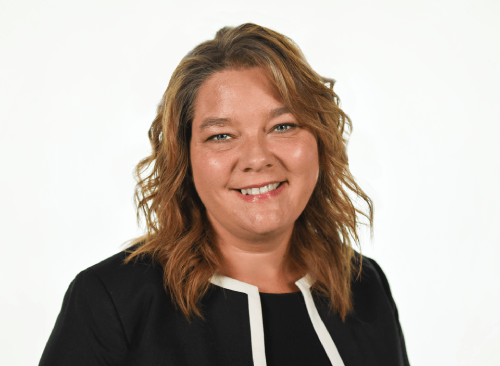
Kathryn Coulson
"We Had to Shift Focus from What We're Teaching to What Students Are Learning"
Every Catholic diocese carries a version of the same tension. The schools within it are parish schools — each one shaped by its own community, its own history, its own parish culture. Teachers and families take pride in that distinctiveness. And yet the diocese exists precisely to hold those schools together, to ensure that a child in a small rural parish receives an education as rigorous and as Catholic as the one offered at the flagship school in the city.
It is the difference between a school system and a system of schools — and navigating that gap is one of the most difficult challenges facing Catholic education leadership today.
For the Diocese of Jefferson City, that tension reached a tipping point. And the answer, it turned out, was Atlas.
The Problem No One Could See Clearly
Kathryn (Kathy) Coulson was appointed as the diocese's first-ever Director of Curriculum and Instruction roughly two years ago. The position itself was a signal: the diocese's superintendent, Dr. Vader, had heard enough from school administrators to know that something had to change.
Spread across a large swath of rural and suburban Missouri, the diocese's 38 schools serve approximately 7,000 students — ranging from a school of 620 to a community of just 40. Many schools have one teacher per grade level. Some teachers serve two grade levels in the same classroom. And in many cases, the nearest peer at the same grade level is a 45-minute drive away.
Curriculum planning had happened, in fits and starts, across the diocese. Some teachers used Google Docs. Some used pencil and paper. A handful of schools had developed annual curriculum maps, but without a shared platform or shared language, those maps often became artifacts rather than living tools. "Teachers weren't sure what to do next," Kathy recalls. "And principals weren't sure what to do next."
The deeper problem was harder to see: even when teachers were working hard and following the diocesan curriculum standards, no one could be certain whether what was happening in classrooms was actually aligned to those standards. The resources teachers relied on, in many cases, hadn't been audited against diocesan expectations. Some standards were being over-taught; others had real gaps. Everyone suspected this. No one could prove it, or fix it, without a shared system to look through together.
One of the things that we really were looking for, was how do we bring about that clarity to teachers? And get that communication among them going , and also give us feedback as a committee on our standards: when we say a guaranteed viable curriculum, is it viable? Or is there something we need to look at?
– Kathy Coulson, Director of Curriculum and Instruction, Diocese of Jefferson City
The Decision to Go Diocese-Wide
Some of the diocese's high schools had already used CurriculumTrak, Atlas's sister platform. When Faria Education Group acquired CurriculumTrak and merged it into Atlas, Kathy recognized in the upgraded platform something she hadn't seen before: a tool capable of scaling across an entire diocese, not just a single school.
But adopting one platform diocese-wide meant solving a structural problem. Parish schools operate with significant financial independence. A mandate from the school office wasn't going to work — and even if it could, a mandate without support would have set the initiative up to fail.
Superintendent Dr. Vader saw it differently. She didn't just invest in the platform. She invested in the infrastructure to make it succeed.
Dr. Vader worked to build into our budget having the platform available for our schools, AND having professional development built in, so that there was support for me in the process… It wasn't me just going to each school individually. We had a dedicated person from Atlas that was leading professional development and they joined with me to facilitate.
– Kathy Coulson, Director of Curriculum and Instruction, Diocese of Jefferson City
That partnership with Atlas's FariaLearn professional development team became the backbone of the implementation.
Frontloading the Support That Actually Changes Practice
What made the Diocese of Jefferson City's implementation plan distinctive was its intentional structure: Atlas and the diocese co-designed a five-year plan that frontloads the most intensive support at the beginning — when teachers are newest to the platform and the conceptual shifts feel largest — and gradually releases that support as internal capacity grows.
The PD structure gave us greater support at the beginning, when we definitely needed it, And then we were able to release some of that support towards the end, because most of our schools will have adopted it, and I will have become more comfortable in what I needed to do to support them.
– Kathy Coulson, Director of Curriculum and Instruction, Diocese of Jefferson City
But the FariaLearn team's role wasn't just technical training. It was professional development in the fullest sense, coaching teachers and leaders through a fundamental shift in how they think about curriculum.
One of the things that I knew was going to be needed before they even logged in, was having some professional development to understand backwards design and unit planning — the importance of shifting that thinking from what am I planning to do this week, day-to-day tasks, to shifting to what is it that students will be learning? How am I going to determine if they've learned it? And then what am I going to teach day to day?
– Kathy Coulson, Director of Curriculum and Instruction, Diocese of Jefferson City
A dedicated FariaLearn curriculum specialist was assigned to the diocese, and has been that consistent presence — in person for initial training days, on Zoom for school-level follow-up sessions, and always working alongside Kathy in a way that multiplied what one diocesan leader could do alone. When teachers' initial anxiety about the platform began to spike, it was the FariaLearn team who helped redirect the fear.
These reports are not a 'gotcha' type of thing, Elizabeth, our FariaLearn curriculum specialist, has done a really good job of expressing that. It is truly for you to be able to identify: okay, this is where there's a hole that I can fill to make it better for my students.
– Kathy Coulson, Director of Curriculum and Instruction, Diocese of Jefferson City
The model worked. Schools that were initially hesitant found that the second or third session with Elizabeth made the first training click into place.
Within minutes, that anxiety level decreased, And they're like, 'Oh, yeah, I remember getting into that — oh yeah, I see how that works.' And then they started pulling out what they used to plan and inputting it. They're like, 'Oh, this wasn't as bad as what I imagined.'
– Kathy Coulson, Director of Curriculum and Instruction, Diocese of Jefferson City
Planning curriculum alignment across multiple Catholic schools?
Atlas can give your schools a shared curriculum framework while preserving the traditions, priorities, and character of each community. Explore how a diocesan approach could work for your schools.
Request a Demo of Atlas for Catholic SchoolsWhat the Data Revealed — and Changed
Once teachers were inside Atlas and using the standards-alignment reporting tools, the insights came quickly. And they were illuminating.
The resources that they use, that are in their classrooms, that the schools have adopted — they don't fully meet our diocesan standards. In some cases, there are components that don't have anything — they would have to have additional resources in order to meet our standards. And in some cases there were things they were using that were unnecessary for that grade level.
– Kathy Coulson, Director of Curriculum and Instruction, Diocese of Jefferson City
Administrators had suspected this for years. But there's a significant difference between a leader telling a teacher their curriculum may have gaps and a teacher seeing it themself through a standards alignment report.
You could just hear them: 'You mean I don't have to do this unit? And I've done this whole project and that's not something I need to do?' And it's great to hear them have those light bulb moments — because now you can see this is going to have a direct impact on the decisions they make the next year.
– Kathy Coulson, Director of Curriculum and Instruction, Diocese of Jefferson City
The high school math department experienced a version of this, too. Using Atlas's reporting tools, teachers discovered that Algebra 1 coverage had not been progressing as far as they had assumed — meaning Algebra 2 teachers were starting from a gap they didn't know existed. Now they could name it, plan around it, and address it directly.
Equally significant: the process of building curriculum maps in a shared platform revealed high-performing teachers Kathy simply hadn't known about.
I've been able to build a relationship and identify some of our teachers that I would have had no idea were doing such great things. They had such great knowledge — and because I've been able to work with them, and with Elizabeth alongside them, I've already started to select some of the teachers that I know are going to be the mentor teachers for that region.
– Kathy Coulson, Director of Curriculum and Instruction, Diocese of Jefferson City
This is what Atlas makes possible at the diocesan level: not surveillance, but visibility — the kind that allows a curriculum leader to see across 38 schools, identify excellence, surface gaps, and build a team capable of sustaining the work long after the intensive support phase ends.
Making Catholic Identity Operational: From Mission Statement to Curriculum Map
Ask any Catholic school leader whether their school integrates faith across all subjects, and the answer will almost always be yes. Ask them to show you where and how that integration is documented — unit by unit, grade by grade — and the conversation often gets harder.
This is not a failure of commitment. It is a failure of infrastructure. Catholic identity — the conviction that every academic discipline participates in the truth of God's creation, that every classroom is a place of formation as much as instruction — has historically lived in the hearts of dedicated teachers, in the culture of a school community, in its traditions and its prayers. What it has rarely lived in is the curriculum document.
Atlas changes that.
One of the most deliberate decisions the Diocese of Jefferson City made in designing their Atlas implementation was to build faith integration directly into the unit plan template — not as an optional field to be filled in if a teacher thought of it, but as a structural element woven into the architecture of every unit alongside standards, assessments, and instructional strategies.
Within our unit plan, it is specified there of how to integrate our faith, and then also within the lesson plans, it's integrated there. We have it already within our standards, so it's tied. The curriculum framework that results isn't one in which Catholic identity is bolted onto good instruction as an afterthought. It is one in which faith integration is a documented expectation from the moment a teacher begins planning.
– Kathy Coulson, Director of Curriculum and Instruction, Diocese of Jefferson City
This is grounded in a conviction that runs deep in the Catholic intellectual tradition: faith and reason are not in competition, and every subject — mathematics, literature, science, history — is a way of knowing something true about God's creation. When a teacher documents how a unit on fractions connects to the inherent order of the created world, or how a history lesson on civil rights reflects the Church's teaching on human dignity, they are not adding a religious veneer to a secular lesson. They are teaching as the Church has always understood education: as an act of formation.
Every teacher is a Catholic school teacher, whether you're Catholic or not, you are expected to integrate the Catholic faith within every subject area, no matter what it is.
– Kathy Coulson, Director of Curriculum and Instruction, Diocese of Jefferson City
Atlas's flexible, diocese-designed templates made that expectation concrete. Working with the Atlas team, Kathy drafted the template structure she envisioned, and the team built it into the system.
It was really cool for me to see how that was laid out visually — very easy to access, the teachers, I knew, even if they struggled with technology, this wasn't going to be hard for them, because it literally turned into a drop-down menu or a text box. Atlas made it easy.
– Kathy Coulson, Director of Curriculum and Instruction, Diocese of Jefferson City
Year one established the infrastructure. Year two is designed to go deeper — moving from having faith integration fields in the curriculum to populating them with real intentionality and richness, school by school. Kathy describes a future in which Atlas becomes the place where the diocese can honestly ask: across all 38 schools and every grade level, are we actually living our Catholic identity in instruction? Not just in religion class. In every class.
The diocese is building its calendar to match that ambition. Dr. Vader has designated five shared professional development days across all schools — two dedicated to faith formation for teachers and staff, three that bring schools together by region for curriculum development work. The message is unmistakable: academic rigor and Catholic identity are not competing priorities. They are the same priority, and they belong in the same room.
What could greater curriculum visibility reveal across your schools?
See how Atlas helps Catholic school and diocesan leaders identify standards gaps, unnecessary repetition, alignment opportunities, and teacher expertise across grades, subjects, and campuses.
Request a Personalized Atlas WalkthroughCounsel for Curriculum Leaders Ready to Begin
Kathy's advice to other diocesan curriculum directors considering this journey is offered with the hard-won warmth of someone still in the middle of it.
Listen, and ask questions — to the administrators and to the teachers. It helps you determine next steps, and it helps you identify stumbling blocks that are going to come along the way.
– Kathy Coulson, Director of Curriculum and Instruction, Diocese of Jefferson City
She also urges leaders to resist the pull toward perfectionism — in themselves and in the process.
Give yourself grace. There are going to be bumps in the road and mistakes made. And we want our teachers to make mistakes and learn from them. The same is true for the people leading this work.
– Kathy Coulson, Director of Curriculum and Instruction, Diocese of Jefferson City
And when the hard moments come — and they will — Kathy reaches for an image her Atlas specialist Elizabeth offered her:
Yes, there are some thorns. But there's a lot of beautiful things going on that this is building towards. Take a step back and don't focus on just a thorn that's happening — look at the entire beauty of what's developing.
– Kathy Coulson, Director of Curriculum and Instruction, Diocese of Jefferson City
The Diocese of Jefferson City is two years into a journey that will unfold over the next five. The curriculum maps are being built. The mentor teachers are being identified. The standards are being examined honestly, perhaps for the first time. And a diocese that once operated as a system of schools is beginning to function, together, as a school system — without sacrificing the parish identity that makes each of its communities irreplaceable.
Atlas made it possible. FariaLearn made it sustainable. And a diocese committed to the mission of forming disciples is doing the rest.
Is your diocese navigating the tension between school autonomy and diocesan alignment?
Whether you're just beginning to explore curriculum management platforms or you're ready to design a multi-year implementation plan, our Catholic schools team would love to connect. We'll start with your goals — and build from there.
Request a conversation with the Atlas team